Home Oxygen Therapy Equipment: Portable vs Stationary Concentrators
News Details
Oxygen therapy plays an important role in homecare. For patients who need long-term oxygen support, the right equipment can improve daily comfort and make treatment easier to manage. However, not every patient has the same needs. Some spend most of their time at home, while others want to stay active and travel.
For homecare providers, medical equipment distributors, and healthcare buyers, understanding the difference between portable and stationary oxygen concentrators is essential. Both are important types of home oxygen therapy equipment, but they serve different purposes.
So, how should buyers explain the differences to customers and help them choose the right product?
1. What Is a Home Oxygen Concentrator?
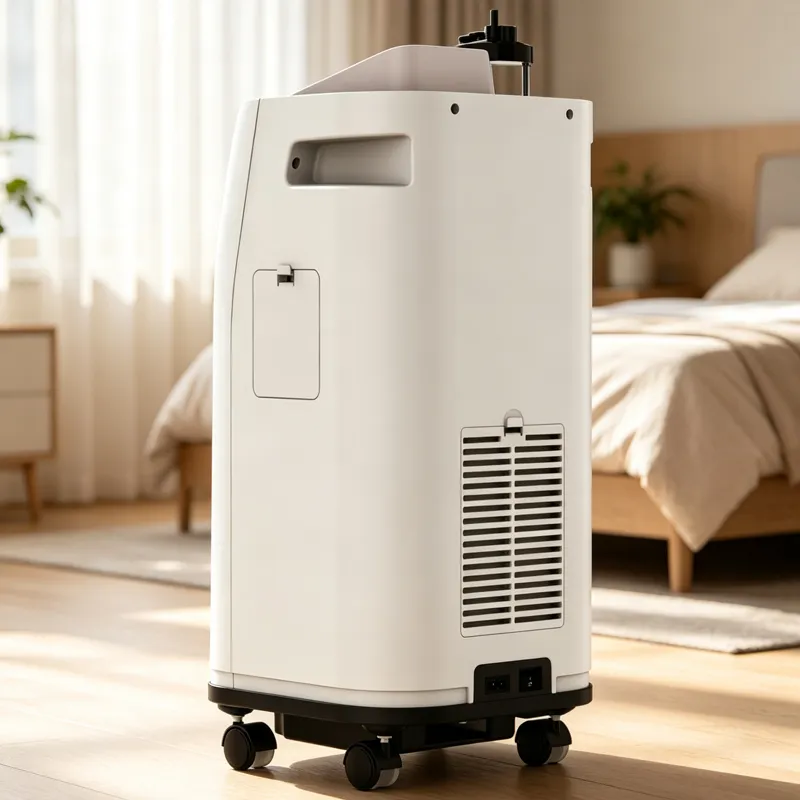
An oxygen concentrator is a medical device that takes in room air, removes most of the nitrogen, and delivers concentrated oxygen to the user.
Unlike oxygen cylinders, concentrators do not need regular oxygen refills. Instead, they use a power source to produce oxygen continuously or in response to the user's breathing, depending on the device.
There are two common options in homecare:
-
Stationary oxygen concentrators: Designed mainly for use at home, with a focus on stable oxygen delivery.
-
Portable oxygen concentrators: Smaller and lighter devices designed to support users who need oxygen while moving around.
Both options are widely used in home oxygen care. However, their size, power supply, oxygen delivery modes, and daily applications are different.
2. Portable vs Stationary Oxygen Concentrator: Key Differences
When comparing a portable vs stationary oxygen concentrator, buyers should look beyond appearance and price. The most important factors include oxygen delivery, mobility, battery life, and daily use.
Portable Oxygen Concentrators

A portable oxygen concentrator (POC) is designed for users who want greater freedom of movement. Its compact size makes it easier to carry during daily activities, short trips, and outdoor visits.
Most portable models use rechargeable batteries. Some also support AC and DC power, allowing users to charge the device at home or in a vehicle.
Key advantages include:
-
Lightweight and compact design.
-
Rechargeable battery for use away from wall outlets.
-
Convenient for travel and outdoor activities.
-
Flexible power options on supported models.
For example, Provision Healthcare offers portable models such as the KP-6S, which weighs approximately 1.6 kg, providing a compact option for homecare suppliers.
However, buyers should also consider battery runtime and oxygen delivery settings. Most portable models use pulse-dose delivery, although some support continuous flow. Not every portable unit can meet every patient's oxygen requirements.
Stationary Oxygen Concentrators
A stationary oxygen concentrator is mainly designed for long-term use in the home. It is generally larger and heavier than a portable unit and usually connects directly to a household power supply.
Many stationary models provide continuous-flow oxygen, making them suitable for users who need a steady oxygen supply according to their prescription.
Key advantages include:
-
Designed for extended daily operation.
-
Continuous oxygen delivery on supported models.
-
Less need to carry or recharge batteries.
-
Suitable for bedrooms, living rooms, and homecare settings.
Stationary units are a practical choice for patients who spend most of their time indoors and need regular oxygen support.
However, they depend on an electrical supply. Buyers should also consider noise levels, maintenance needs, and backup plans for power interruptions.
3. Portable vs Stationary Oxygen Concentrator: Comparison Table
| Feature | Portable Concentrator | Stationary Concentrator |
| Main purpose | Mobility and outdoor use | Long-term home use |
| Size | Compact | Larger |
| Weight | Lightweight | Heavier |
| Power supply | Battery, AC/DC on supported models | Mainly AC power |
| Oxygen delivery | Often pulse dose; some continuous flow | Usually continuous flow |
| Battery | Rechargeable battery | Generally no built-in battery |
| Typical users | Active users who need mobility | Users who mainly stay at home |
The exact specifications depend on the model. Therefore, buyers should always check oxygen output, delivery mode, battery performance, and operating conditions before making a purchasing decision.
4. How Should Buyers Explain the Right Choice to Customers?
Portable or stationary concentrator: what should buyers explain to customers?
The answer starts with understanding how the equipment will be used. Rather than recommending a product based only on its price or size, homecare providers should explain several key points.
Oxygen Requirements Come First
The user's prescribed oxygen flow and delivery mode are the most important factors.
For example, some patients need continuous-flow oxygen, while others may be prescribed pulse-dose delivery. These two modes are not interchangeable.
Buyers should explain that pulse settings are not the same as continuous-flow settings in liters per minute. A healthcare professional must confirm whether a particular model meets the user's medical needs.
Daily Mobility Matters
Next, consider the user's lifestyle.
Patients who spend most of their time indoors may prefer a stationary unit. On the other hand, people who regularly go outside may benefit from a lightweight portable model.
For some users, a combination of both devices may provide a more practical solution.
Battery Life and Power Supply
Battery performance is another important point when discussing portable oxygen concentrators.
Buyers should explain that actual battery runtime depends on the device, oxygen setting, breathing rate, and battery condition. Customers who spend long periods outside may need spare batteries or access to charging.
For stationary models, reliable household power and an appropriate backup plan should also be discussed.
Maintenance and After-Sales Support
Finally, customers need to understand basic maintenance.
Both types of equipment require regular care, including filter cleaning or replacement according to the manufacturer's instructions. Buyers should also provide clear information about warranty terms, spare parts, technical support, and product training.
5. How to Build a Better Oxygen Concentrator Product Line for Homecare
For medical distributors and homecare equipment suppliers, offering both portable and stationary models can help meet a wider range of customer needs.
A balanced product line should consider:
-
Portable models: Focus on compact size, battery options, carrying comfort, and suitable oxygen delivery modes.
-
Stationary models: Focus on stable output, continuous operation, noise control, and ease of maintenance.
-
Product variety: Offer different specifications to serve different homecare requirements and market segments.
-
Technical support: Work with manufacturers that provide product documentation, replacement parts, and reliable after-sales service.
Provision Healthcare provides portable and home oxygen concentrator options for medical professionals, distributors, and homecare providers. By comparing product specifications and application needs, buyers can build a product range that better serves their target markets.
6. Frequently Asked Questions
Can a portable oxygen concentrator replace a stationary unit?
Not always. Some portable models may support both home and outdoor use. However, their oxygen output and delivery modes may differ from stationary units. The prescribed oxygen requirements must always guide the choice.
Which oxygen concentrator is better for homecare?
There is no single answer. Stationary units are often suitable for users who mainly stay at home, while portable models offer greater mobility. The right choice depends on medical requirements and daily activities.
What should distributors check before buying oxygen concentrators?
Distributors should compare oxygen output, flow modes, battery life, noise levels, certifications, warranty terms, spare parts, and after-sales support. They should also consider local market requirements and customer demand.
Conclusion
Portable and stationary oxygen concentrators both play important roles in home oxygen therapy. While portable models focus on mobility and convenience, stationary units are designed for regular home use and stable oxygen delivery.
For distributors and homecare providers, understanding these differences makes it easier to explain product features, manage customer expectations, and build a suitable equipment portfolio.
Looking for reliable oxygen concentrators for your homecare product line? Explore Provision Healthcare's product range atour website and contact our team to discuss your wholesale and distribution needs.


