How Long Does a Portable Oxygen Concentrator Battery Last?
News Details
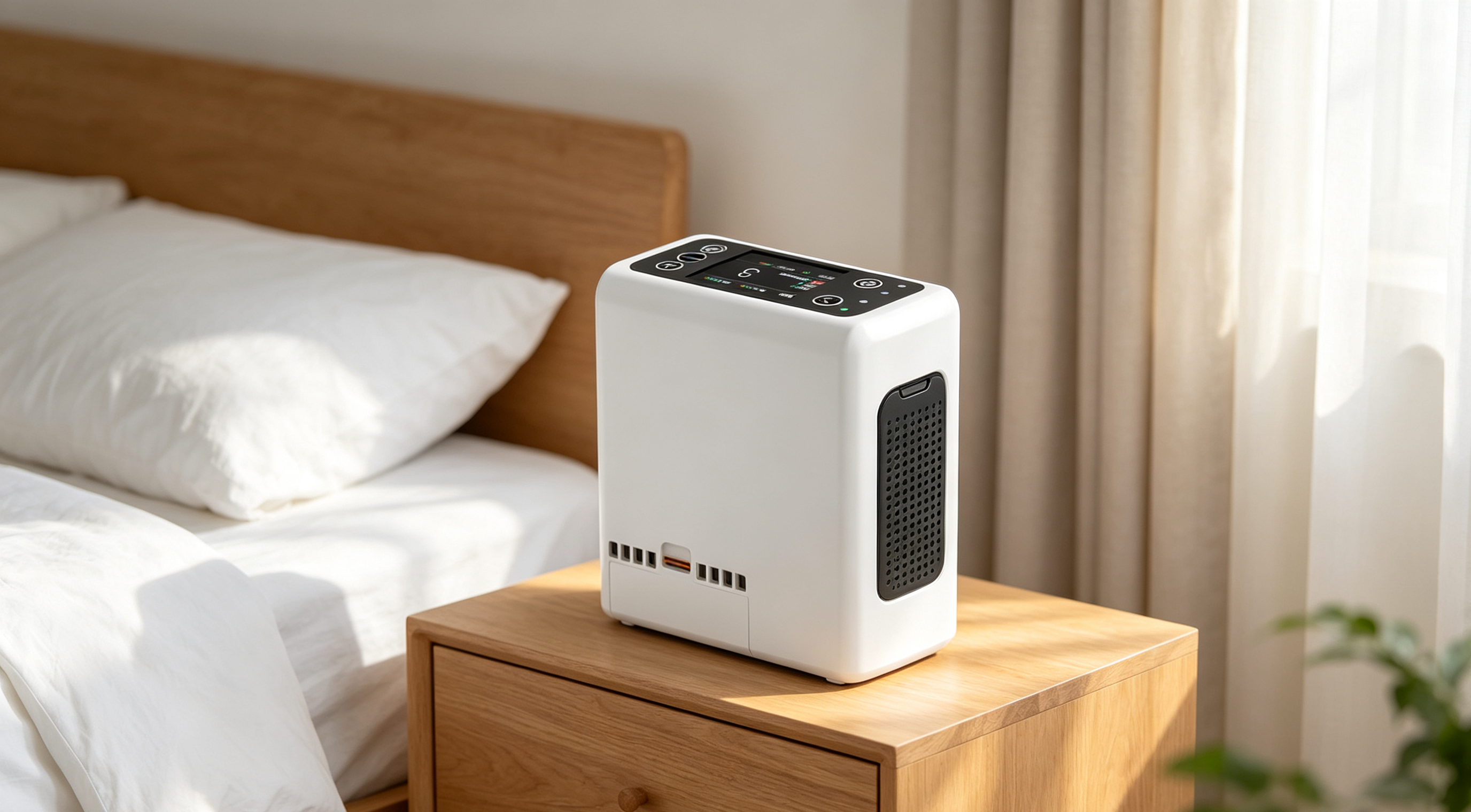
For healthcare providers, distributors, and medical equipment buyers, battery performance is an important part of choosing a portable oxygen concentrator (POC). A device may be lightweight and easy to carry, but its value also depends on how long it can operate away from a wall outlet.
So, how long does a portable oxygen concentrator battery last? The answer depends on the battery capacity, oxygen setting, breathing rate, device design, and operating conditions. This guide explains the key points buyers should consider.
What Is a Battery Powered Oxygen Concentrator?
A battery powered oxygen concentrator is a compact oxygen therapy device that uses rechargeable batteries instead of relying only on AC power. It takes oxygen from the surrounding air and delivers concentrated oxygen to the user.
Unlike stationary oxygen concentrators, portable models are designed for mobility. They can typically work with an internal battery and may also support AC or DC power.
For example, ProVision Healthcare offers several portable oxygen concentrators. Its KP-6S model uses an 8-cell battery with a stated battery duration of about 2.5–4.5 hours, while the YB-A10 is designed with an average power rating of 100W.
What Affects Portable Oxygen Concentrator Battery Life?
Portable oxygen concentrator battery life is not a fixed number. Several factors can change actual runtime.
Oxygen Setting
Higher oxygen settings usually require more energy. As a result, the battery may run for less time at a higher setting.
Pulse-dose devices may also use different amounts of power at different settings. Therefore, buyers should check the manufacturer's runtime table instead of relying only on the maximum battery life.
Breathing Rate
For pulse-dose POCs, the device delivers oxygen when it detects a breath. A higher breathing rate can lead to more oxygen pulses and greater power use.
Therefore, actual runtime may be shorter than the laboratory or brochure figure.
Battery Age
A rechargeable POC battery gradually loses capacity after repeated charge and discharge cycles. As the battery ages, operating time can decrease.
For this reason, healthcare providers should consider battery replacement and availability when evaluating a POC for long-term use.
Temperature and Operating Conditions
Very high or low temperatures can affect battery performance. In addition, blocked air vents, heavy use, or other operating conditions may increase the load on the device.
Manufacturers commonly note that battery runtime can vary with breathing rate, battery age, and environmental conditions.
How Much Power Does a Portable Oxygen Concentrator Use?
Portable oxygen concentrator power consumption varies by model and operating mode. Compact POCs generally use less power than stationary oxygen concentrators because they are designed for battery operation.
For example, ProVision's YB-A10 lists an average power rating of 100W. Its KP-6S is designed around an 8-cell battery system.
However, wattage alone does not tell buyers how long a battery will last. Battery capacity, measured in watt-hours (Wh), should also be considered.
A simple estimate is:
Estimated Runtime = Battery Capacity (Wh) ÷ Power Consumption (W)
In real use, the result will be lower because of power conversion losses and changes in operating conditions.
How Can Buyers Compare POC Battery Performance?
For B2B buyers, it is better to compare several specifications together rather than looking at battery size alone.
Consider these points:
-
Battery capacity and cell configuration
-
Rated operating time at each oxygen setting
-
Average and maximum power consumption
-
AC and DC charging options
-
Charging time
-
Replacement battery availability
-
Battery cycle life
-
Weight of the battery and complete device
-
Safety and protection features
-
Required certifications and documentation
A reliable supplier should also provide clear test conditions for its stated battery runtime.
How Can You Extend POC Battery Life?
Good battery management can help maintain reliable operation.
First, charge the battery according to the manufacturer's instructions. Second, avoid leaving the battery fully discharged for long periods. Third, use an approved charger and power supply. Finally, store and operate the device within the recommended temperature range.
Some POC manuals also recommend using external power whenever possible and avoiding complete battery depletion because deep discharge may damage the battery.
Why Is Power Performance Important for B2B Buyers?
For distributors, hospitals, home-care providers, and medical equipment brands, power performance affects both product value and user experience.
A POC with efficient power use can offer longer operation between charges. At the same time, flexible charging options can make the device easier to use in homes, vehicles, and other mobile settings.
Therefore, buyers should evaluate portable oxygen concentrator battery life together with oxygen output, device weight, charging options, reliability, and after-sales support.
Choose the Right Portable Oxygen Concentrator Supplier
Battery performance is only one part of a good POC. A qualified medical device manufacturer should also provide stable product quality, technical documentation, customization support, and reliable supply.
ProVision Healthcare specializes in respiratory and life-health products, including portable oxygen concentrators, oxygen concentrators, CPAP/BiPAP machines, and nebulizers. The company focuses on R&D, production, and sales of medical and health equipment.
For distributors and healthcare companies, understanding POC battery capacity and portable oxygen concentrator power consumption can make product selection easier. More importantly, it helps ensure that the selected device matches the real needs of the target market.


