How Are Low-Noise Oxygen Concentrators Tested?
News Details
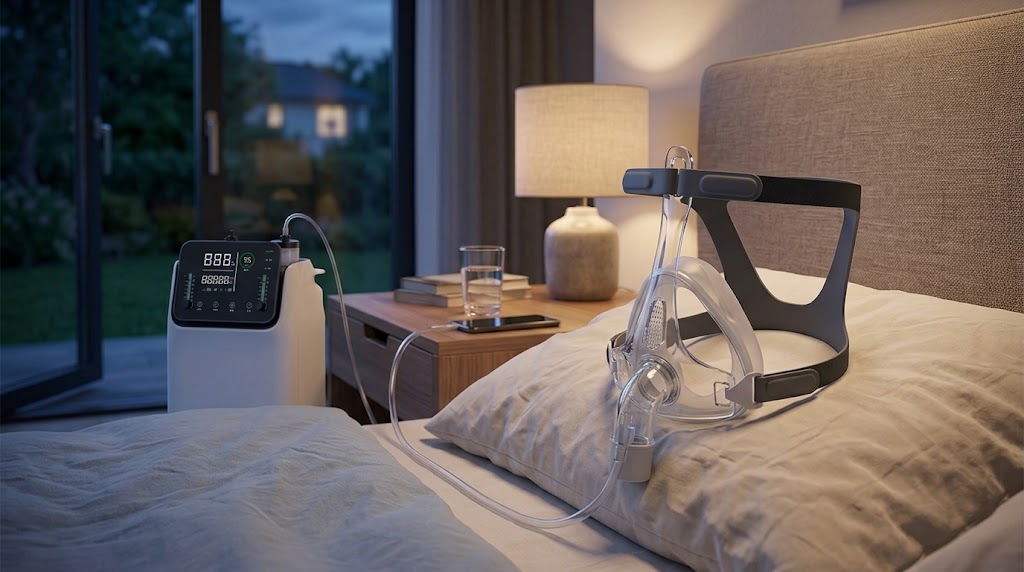
Noise is an important factor when choosing an oxygen concentrator for home care. A machine may run for many hours each day, so constant motor or compressor noise can affect comfort, rest, and the overall user experience.
For medical equipment distributors and homecare suppliers, however, the term quiet oxygen concentrator should be supported by clear test data. Instead of relying only on product descriptions, buyers should understand how the oxygen concentrator noise level is measured and what conditions can change the result.
ProVision Healthcare develops and manufactures oxygen concentrators and other respiratory care products for global healthcare markets. Its product range includes portable and stationary models for home and medical use.
What Does Oxygen Concentrator Noise Level Mean?
The oxygen concentrator noise level is usually expressed in decibels, written as dB(A).
The "A" weighting adjusts the measurement to better reflect how people hear sound. A lower dB(A) value generally means a quieter machine.
However, one number does not tell the whole story. Noise can come from several parts of a concentrator, including:
-
Compressor operation
-
Cooling fans
-
Airflow
-
Valves and internal components
-
Vibration from the motor
-
The machine's outer housing
Therefore, manufacturers need to control both sound and vibration when developing a low noise oxygen concentrator.
How Is a Quiet Oxygen Concentrator Tested?
A typical noise test starts with a controlled test environment. The concentrator is placed on a stable surface and operated under a defined working condition.
The test setup should control factors such as:
-
Background noise
-
Room conditions
-
Device position
-
Distance from the sound meter
-
Oxygen flow setting
-
Operating mode
-
Measurement time
A sound level meter is then used to record the noise produced by the machine. The measured value can be recorded in dB(A).
For B2B buyers, it is important to ask how the supplier obtained the stated noise figure. A result without test conditions is difficult to compare with another product.
What Can Make an Oxygen Concentrator Quieter?
A quieter design normally requires several engineering choices rather than one single component.
Compressor Design
The compressor is often one of the main sources of mechanical noise. A well-designed compressor can reduce vibration and operating sound.
For example, ProVision's ZY-1FW compact oxygen concentrator uses a low-noise 120W eco-compressor and is designed for home and medical use.
Vibration Control
Even when a compressor itself is relatively quiet, vibration can travel through the machine housing and floor.
Manufacturers can reduce this effect with suitable mounts, damping materials, and structural design.
Fan and Airflow Design
Fans help remove heat from the device. However, a poorly designed airflow path can create additional sound.
A good home oxygen concentrator should balance cooling performance with acoustic comfort.
Housing Structure
The outer housing can also affect sound. Strong and well-fitted panels can help reduce vibration and prevent unwanted rattling.
What Noise Levels Are Available in Current Models?
Product specifications can vary significantly between oxygen concentrators.
For example, ProVision lists the KP-6S portable oxygen concentrator with a noise specification of less than 45 dB(A).
Its KPE-8 portable model is also listed at less than 45 dB(A).
By comparison, the DN-BH10 portable model is specified at less than 60 dB(A).
These figures show why buyers should compare the exact model rather than assume that every portable or home oxygen concentrator has the same acoustic performance.
Why Does Quiet Operation Matter for Home Oxygen Therapy?
A quiet oxygen concentrator can be particularly useful in residential settings.
Users may operate the device while:
-
Sleeping
-
Reading
-
Watching television
-
Working from home
-
Talking with family
-
Resting during the day
For distributors, low operating noise can therefore be an important product feature when serving homecare customers.
Still, noise should not be considered alone. Oxygen concentration, flow range, reliability, power consumption, maintenance, and required certifications are also important when selecting equipment.
What Should B2B Buyers Ask an Oxygen Concentrator Supplier?
Before placing a bulk order, buyers should request clear acoustic specifications.
A useful supplier checklist includes:
| Item | What to Confirm |
|---|---|
| Noise rating | dB(A) value |
| Test condition | Flow and operating mode |
| Measurement method | Test setup and equipment |
| Background noise | Ambient sound during testing |
| Distance | Sound meter position |
| Operating time | Stable or startup measurement |
| Model variation | Whether all units meet the rating |
| Maintenance | Filters and parts that may affect noise |
It is also useful to request a sample. Listening to the actual machine can complement the technical data.
How Can You Choose a Low Noise Oxygen Concentrator?
A low noise oxygen concentrator should provide both reliable oxygen performance and suitable acoustic comfort.
For B2B sourcing, start by defining your target market. A homecare product may need stronger focus on noise, size, and ease of use. A clinical model may place greater emphasis on flow capacity, continuous operation, and durability.
Then compare the complete specification instead of choosing only by the lowest noise figure.
ProVision offers portable and stationary oxygen concentrators with different flow ranges, sizes, and operating designs. Its product portfolio is intended for international distributors, healthcare providers, and homecare markets.
Conclusion
Testing noise is an important part of evaluating an oxygen concentrator for home use. The reported dB(A) value should always be considered together with the test conditions, operating mode, and overall device design.
For B2B buyers, the best approach is simple: ask for clear noise data, compare models under similar conditions, and test samples before large-scale purchasing.
With the right combination of quiet operation, stable oxygen output, reliable construction, and supplier support, a home oxygen concentrator can better meet the needs of today's homecare market.


