How Does an Oxygen Concentrator Work? PSA, Sieve Beds and Purity
A clear explanation of how an oxygen concentrator removes nitrogen from room air, why sieve beds matter, and how purity, flow and home use fit together.
2026/11/27
Reading volume: 0
News Details
An oxygen concentrator does not store oxygen; it makes an oxygen-rich stream from room air. If you are asking how an oxygen concentrator works, the answer is pressure and a filtering material that remove most of the nitrogen. Provision Healthcare supplies home and clinical systems; the sections below explain the process in plain language.
Pressure Swing Adsorption
Most units use pressure swing adsorption (PSA). Room air is compressed into one of two vessels. Under pressure, zeolite holds nitrogen while oxygen passes through. The vessels alternate: one produces oxygen while the other releases nitrogen and resets, so the flow continues without a single batch.
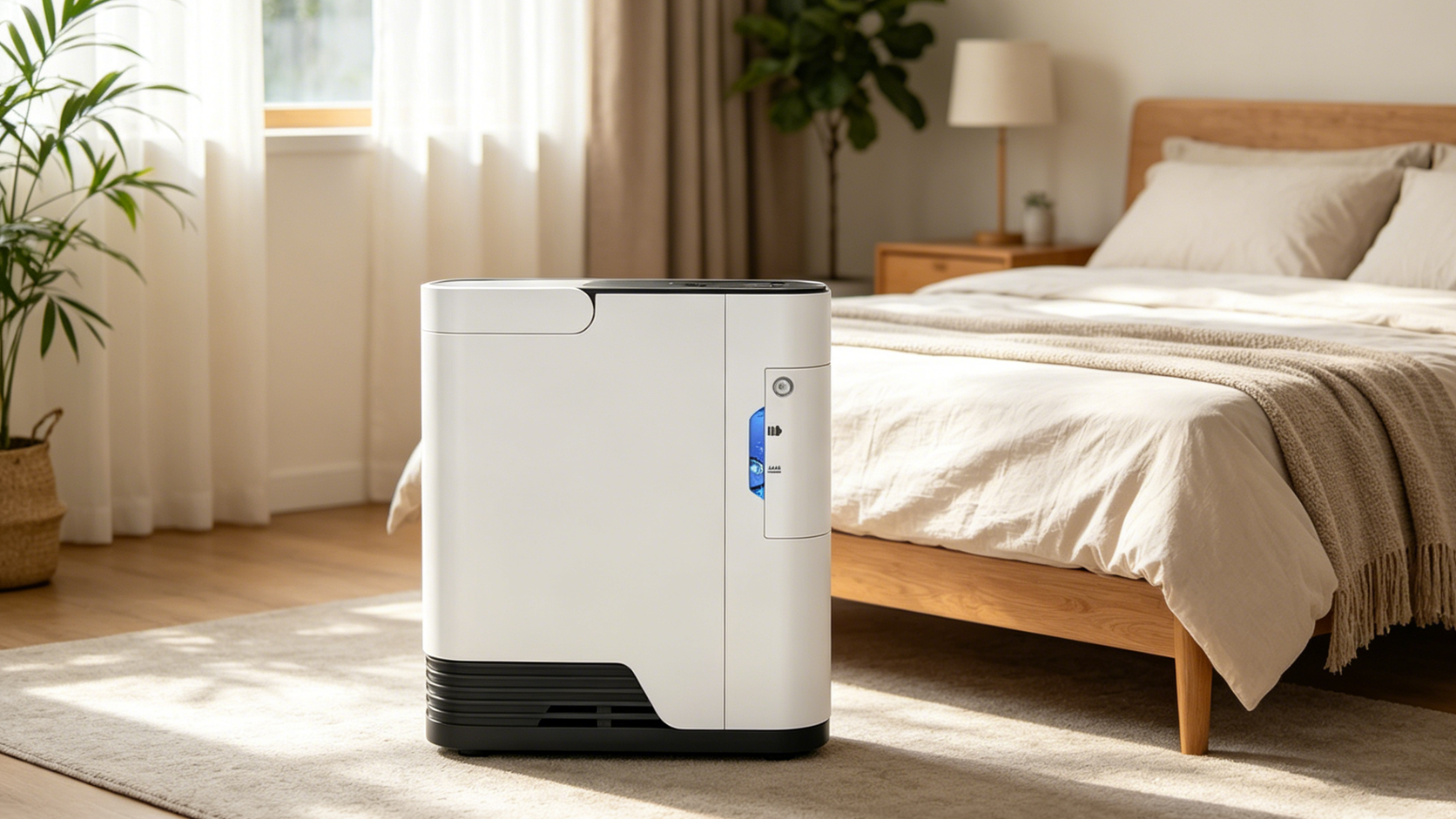
Oxygen Concentrator Sieve Beds
The sieve beds are filled with zeolite that attracts nitrogen more strongly than oxygen. While one bed captures nitrogen, the other is depressurised to release it and prepare for the next cycle. Clean inlet air and a healthy compressor keep the beds working well; a blocked filter reduces performance.
Oxygen Concentrator Components
Besides the sieve beds, the main parts are the compressor, inlet filter, flow meter, outlet and humidifier bottle. The compressor supplies pressure, the filter removes dust, the flow meter sets litres per minute, and the humidifier can reduce dryness. Indicators report low purity or service needs.
Oxygen Purity and Flow Settings
Concentration and flow are different measures. A unit may deliver a high oxygen percentage at a low setting and a lower percentage at maximum flow, depending on the model. The prescription sets the required litres per minute; match the device to that prescription rather than a headline maximum figure.
Oxygen Concentrator vs Oxygen Tank
An oxygen concentrator vs oxygen tank decision comes down to supply. A concentrator needs electricity and produces oxygen from room air. A tank stores compressed gas and works during a power cut but runs out and must be refilled. Many households keep a cylinder as backup on clinical advice.
Home Use Oxygen Concentrator
For a home use oxygen concentrator, check prescribed flow, daily hours of use, noise and whether a humidifier is needed. Provision Healthcare offers home models such as the ZY-5FW. A supplier can help match a prescription to a model, but oxygen settings should only change under medical guidance.
Share to:


