How to Use an Oxygen Concentrator: Setup, Settings, and Safety
A practical guide to setting up an oxygen concentrator, setting the prescribed flow, cleaning filters and recognising common alarms.
2026/11/20
Reading volume: 0
News Details
A home oxygen concentrator draws in room air, removes much of the nitrogen and delivers oxygen-rich air through a nasal cannula or mask. Follow your clinician’s prescription for your oxygen setting and when to use it. Consult your model’s manual for setup, cleaning and troubleshooting.
Setting Up Your Oxygen Concentrator
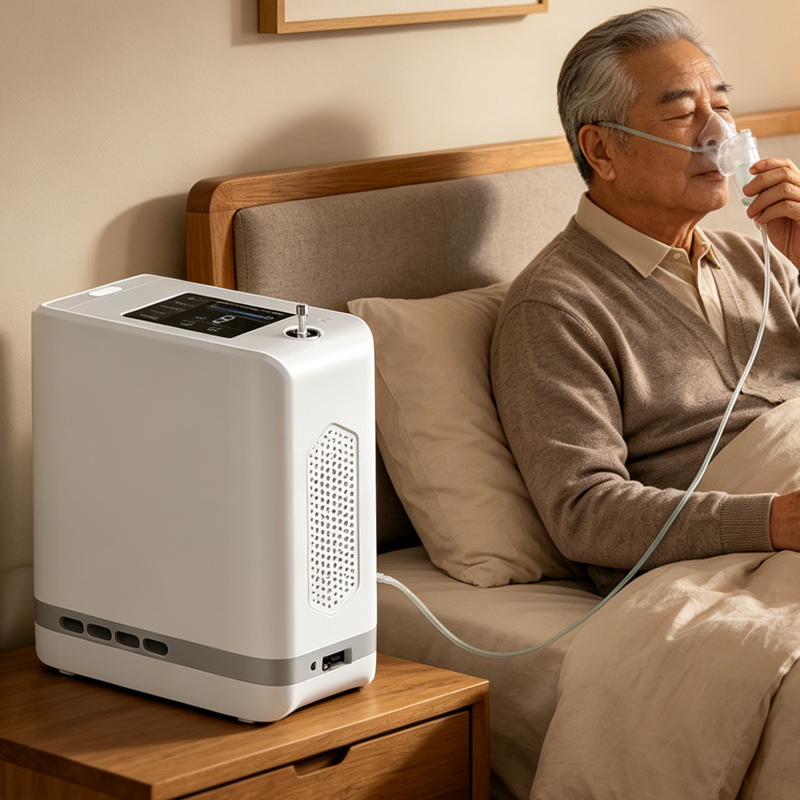
Place the concentrator upright on a flat, stable surface. Leave the clearance specified in the manual around the air intake and exhaust vents, and keep the unit away from curtains, heaters and other heat sources. Plug it directly into a wall socket.
If your oxygen supplier has instructed you to use a humidifier bottle, fill it with distilled water to the marked level and attach it as directed in the manual.
Starting Oxygen Therapy
Wash your hands and connect the tubing to the oxygen outlet or humidifier bottle, as applicable. Attach the nasal cannula or mask and check that the tubing is free of kinks. Turn on the concentrator, allow it to complete the start-up period specified in the manual, and confirm that the indicators show normal operation and that oxygen is flowing. Put on the cannula or mask as shown by your oxygen supplier.
Checking the Prescribed Flow Setting
Use the exact setting prescribed by your clinician. Continuous-flow settings are generally measured in litres per minute. On portable pulse-dose models, the setting number represents a delivery level and should not be read as litres per minute.
Do not change the setting based on how you feel or on a pulse oximeter reading alone. Contact your clinician if your breathing worsens or your readings repeatedly fall outside the range they gave you.
Cleaning the Filter
Follow the cleaning or replacement schedule in your model’s manual. If your unit has a removable, washable filter, switch off and unplug the concentrator before removing it. Wash and rinse the filter as directed, then let it dry completely before refitting it. If you need continuous oxygen, use your prescribed backup supply while the concentrator is off.
Using Oxygen Safely at Home
Oxygen makes fires start more easily and burn faster. Keep the concentrator, tubing and cannula away from cigarettes, candles, gas stoves and other open flames. Follow your supplier’s guidance on safe distances from heat sources. Avoid petroleum jelly and oil-based products around your nose or where they can contact the cannula.
Route tubing away from walkways where possible. If you rely on continuous oxygen, keep the backup supply arranged with your supplier accessible and make sure you know how to use it during a power cut or equipment failure.
Responding to an Alarm
Depending on the model, an alarm may indicate a power failure, blocked tubing, overheating or low oxygen concentration. Check the display and follow the manual’s troubleshooting instructions. Common checks include confirming that the unit has power, the tubing is free of kinks and the vents are clear.
If oxygen delivery stops or the alarm persists, switch to your prescribed backup supply if available and contact your oxygen supplier. If you have severe trouble breathing, call your local emergency number immediately.
Share to:


