Lightweight Portable Oxygen Concentrators: What B2B Buyors Compare
News Details
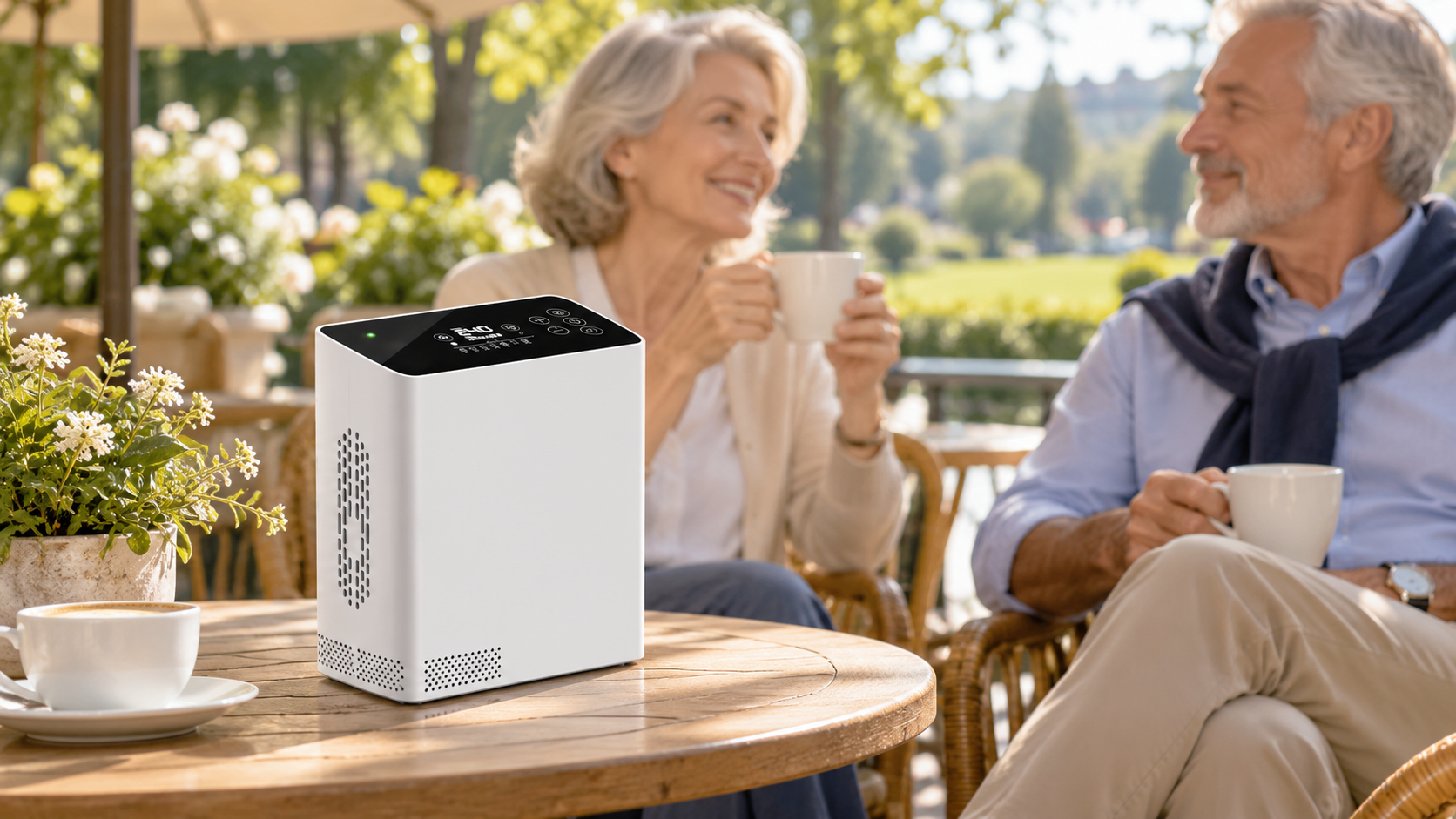
A lightweight portable oxygen concentrator can simplify daily travel. Yet, for distributors, homecare dealers, and rental providers, low weight alone is not enough to determine value.
Buyers must also compare oxygen delivery, noise, battery runtime, and service costs. These factors decide whether a model fits the target market and can be supported over time.
Below is what to review before choosing your next portable oxygen concentrator range.
What Is the Ideal Weight Range for Portable Oxygen Concentrators?
There is no universal ideal weight. The right choice depends on oxygen needs, carrying ability, battery size, and time spent away from home.
For a compact carry-focused range, B2B buyers can use 1.5–3 kg as an initial purchasing target, rather than a clinical standard. Then, verify whether each model fits the intended use. Some patients may require equipment that weighs more.
Always compare the complete carrying setup:
-
Device with the selected battery installed
-
Carry bag or shoulder strap
-
Spare batteries needed for the outing
-
Any charger or accessories carried with it
For example, a lighter machine may lose its weight advantage if it requires more spare batteries. So, compare total carrying weight for the same planned outing.
Clinical suitability comes first. The American Thoracic Society recommends checking oxygen levels on the actual portable device at rest and during activity before purchase or rental.
How to Compare a Lightweight Portable Oxygen Concentrator
Weight figures are only useful when buyers know what they include. Ask whether the quoted value includes the battery, and request the weight of each battery option.
Next, review size and handling. A slim unit may sit closer to the body, while a well-designed strap improves carrying comfort. Controls should also be easy to reach without removing the machine from its approved bag.
Use a simple comparison sheet:
| Buying factor | What to confirm |
|---|---|
| Carrying weight | Device, battery, bag, and spare batteries |
| Oxygen delivery | Mode, output, and concentration at each setting |
| Battery runtime | Hours at the required setting and test conditions |
| Noise | dB(A), test distance, and operating mode |
| Daily handling | Controls, display, battery access, and bag design |
| Service cost | Parts, battery replacement, warranty, and repairs |
Finally, test a sample. A specification sheet cannot fully show how the unit feels during normal use.
What Makes a Quiet POC Worth Comparing?
A quiet POC can be more comfortable during conversations, reading, or other daily activities. Yet, a single noise figure does not capture the full sound experience.
Ask suppliers to specify the measurement distance, background noise, operating setting, and test method. Without these details, two published dB(A) figures may not be directly comparable.
Also, listen for vibration, rattling, and changes in sound during each delivery cycle. Test the sample on a suitable surface with its air vents clear.
Provision Healthcare’s KPE-8 product page lists a noise level below 45 dB(A). Buyers should request the supporting test conditions for the exact configuration they plan to order.
How to Evaluate a Long Battery Oxygen Concentrator
When sourcing a long battery oxygen concentrator, compare runtime at the settings customers will actually use. A maximum runtime claim does not reflect performance across the full operating range.
Battery duration can vary with oxygen setting, breathing rate, battery age, and temperature. Therefore, buyers should request a runtime table with clear test conditions.
In addition, check:
-
Charging time and approved power options
-
Whether charging is supported during operation
-
Replacement battery price and availability
-
Battery warranty and expected service life
-
Low-battery alerts and replacement steps
For rental fleets, easy battery replacement can simplify service planning. However, do not assume that a removable battery can be changed without interrupting oxygen delivery.
Compare Provision Healthcare’s Portable Oxygen Concentrator Options
Provision Healthcare offers several models for B2B review.
The KPE-8 lists a weight of 2.2 kg, oxygen concentration of 93% ±3%, and pulse-flow plus fixed-frequency delivery. Its product page also lists OEM/ODM options and a customization minimum of 50 pieces. Confirm the battery configuration included in the quoted weight.
For battery-focused comparisons, the DN-BH10 lists a weight of 2.2 kg and an advertised runtime of 2–6 hours. Treat this range as a starting point: request runtime by mode, setting, and battery configuration before comparing it with another model.Choose a Lightweight Portable Oxygen Concentrator Supplier for Long-Term Value
A strong purchasing decision balances portability with clear specifications and dependable support.
Before ordering, confirm model-specific documents for your market, sample acceptance criteria, spare-parts supply, warranty terms, and lead times. Also, separate device weight from packed shipping weight when calculating freight costs.
Contact Provision Healthcare with your target market, preferred weight range, required oxygen delivery, and expected order volume. Request current technical sheets and samples to compare a suitable product range for your business.


