Portable Oxygen Concentrator: A Practical Guide
News Details
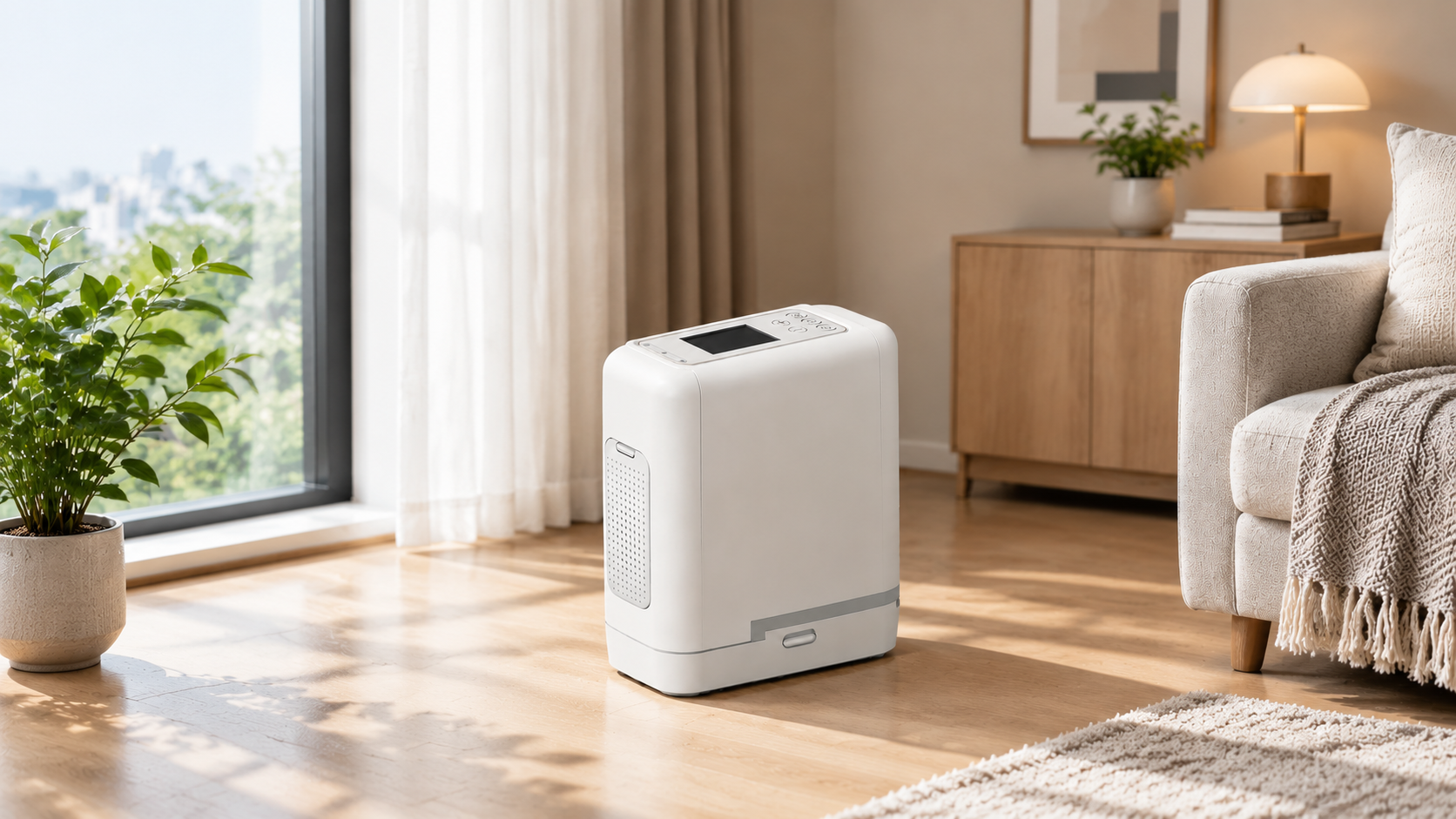 For patients who require oxygen therapy, comfort at home and the ability to move around easily are key. A portable oxygen concentrator can help support daily life by delivering concentrated oxygen through a compact, easy-to-carry device.
Unlike a traditional oxygen tank, a concentrator pulls in ambient air and separates oxygen from other gases. This means it does not require regular refilling in the same way as a compressed oxygen cylinder. However, it does need a reliable power source and routine maintenance.
Provision Healthcare provides a range of portable and home oxygen concentrators for medical professionals, equipment distributors, and home care providers. Its lineup includes lightweight portable models and stationary units suited to various care environments.
What Is a Portable Oxygen Concentrator?
A portable oxygen concentrator is a medical device that extracts oxygen from surrounding air and delivers it in a concentrated form to the user. It is designed for individuals prescribed supplemental oxygen who need greater mobility.
Many portable models run on rechargeable batteries, while others can connect to AC or DC power. This makes them suitable for home use, daily outings, and certain types of travel, as long as the device matches the user's medical needs and travel requirements.
For example, Provision Healthcare offers the KP-6S portable oxygen concentrator, which weighs around 1.6 kg and uses pulse-dose oxygen delivery. Its DN-BH10 model weighs approximately 2.2 kg and supports pulse flow, fixed-frequency, and continuous-flow settings. Features and specifications differ by model.
How Does an Oxygen Concentrator Work?
If you have ever wondered, how does an oxygen concentrator work, the process is simpler than it may appear.
The device first draws in air from the room. Internal filters and a molecular sieve system then remove much of the nitrogen from the air. The purified oxygen is delivered through a nasal cannula or another approved interface.
Most oxygen concentrators rely on pressure swing adsorption (PSA) technology. This method uses a special material to trap nitrogen under pressure, allowing oxygen-rich gas to pass through.
However, oxygen concentration and flow rate vary depending on the model and settings. Portable units may use pulse-dose delivery, which releases oxygen when inhalation is detected, while other models provide continuous flow.
The correct delivery method and setting must align with the user's prescription. A pulse-dose setting is not directly equivalent to the same liters per minute in continuous-flow mode.
How to Choose the Best Portable Oxygen Concentrator
The best portable oxygen concentrator is not always the smallest or lightest option. It is the one that meets the user's prescribed oxygen needs while fitting comfortably into their daily routine.
Before selecting a device, consider the following:
- Oxygen delivery mode: Confirm whether the prescription requires pulse-dose or continuous-flow delivery.
- Weight and size: A lighter unit may be easier to carry throughout the day.
- Battery life: Compare the stated runtime at the settings the user will actually need. Higher settings can shorten battery life.
- Noise level: Quieter models may be more comfortable in the home or shared spaces.
- Power options: Check whether the device supports AC power, vehicle DC power, or spare batteries.
- Maintenance and support: Ask about filters, replacement parts, warranty coverage, and technical assistance.
Provision Healthcare's KP-6S is a compact option listed at about 1.6 kg, while the KPE-8 weighs around 2.2 kg and offers pulse-flow and fixed-frequency modes. These examples give distributors and healthcare suppliers different specifications to compare when building a product range. They are not interchangeable medical recommendations for individual users.
Portable Concentrator vs. Home Oxygen Concentrator
A home oxygen concentrator is typically designed to remain in one location and plug into a wall outlet. A portable concentrator, by contrast, is made to be carried and may run on a rechargeable battery.
Here is a quick comparison:
| Feature | Portable Concentrator | Home Oxygen Concentrator |
| Primary use | Mobility and daily activities | Oxygen therapy at home |
| Power source | Usually battery and AC/DC power | Typically AC power |
| Size | Compact and lightweight | Generally larger and heavier |
| Oxygen delivery | Pulse dose or continuous flow (model-dependent) | Often continuous flow |
| Key consideration | Battery life and prescribed delivery mode | Flow range, noise level, and long-term operation |
For instance, Provision Healthcare offers the ZY-1FW home oxygen concentrator with an adjustable flow range listed at 1–7 L/min. Its ZY-5AW model is a stationary unit designed for clinical and home use, with a listed flow range of 0.5–5 L/min. These products provide different options for suppliers serving home care and clinical markets.
A portable device may not replace a stationary unit for every user. A healthcare professional should confirm which equipment and delivery mode are suitable.
How to Use a Portable Oxygen Tank Safely
People often say “portable oxygen tank” when discussing oxygen equipment. However, an oxygen tank and a portable oxygen concentrator function differently: a tank stores compressed oxygen, while a concentrator generates oxygen-rich air from the surrounding environment.
If you are using a portable oxygen tank, always follow the instructions for that specific cylinder and regulator. As a general guideline:
- Check the cylinder label to ensure it contains the correct medical-grade oxygen.
- Inspect the regulator, tubing, and connections for any damage before use.
- Set the oxygen flow strictly as prescribed by your healthcare provider.
- Keep the cylinder secure in its approved holder during use and transport.
- Keep oxygen equipment away from smoking, open flames, sparks, and other ignition sources.
- Follow the supplier's guidelines for storage, handling, and refilling.
For a portable oxygen concentrator, use only approved power sources and accessories, check the battery level before leaving home, and follow the device's operating manual. Never adjust the prescribed oxygen setting without medical guidance.
If the user requires oxygen during sleep, exercise, or air travel, a healthcare professional should confirm that the selected device can meet those needs. Not every portable model is suitable for every situation or airline.
Provision Healthcare: Portable and Home Oxygen Solutions
Healthcare distributors and home care providers often need more than one type of oxygen concentrator to serve different patients. A compact portable unit may suit a customer on the move, while a stationary unit may better fit a home care plan requiring a different flow range.
Provision Healthcare offers both portable and stationary oxygen concentrators, as well as respiratory products such as CPAP and BiPAP devices and nebulizers. This range gives B2B buyers several product categories to review when planning their medical equipment supply.
For example, a distributor could compare the KP-6S and KPE-8 for portable equipment needs, then review the ZY-1FW for stationary home use. This is an illustrative product-selection scenario, not a reported customer case. Final selection should be based on verified specifications, local regulations, intended use, and the user's prescribed therapy.
For wholesale or OEM/ODM inquiries, buyers can review the product details and contact Provision Healthcare through its official website.
Final Thoughts
A portable oxygen concentrator can make prescribed oxygen therapy easier to manage outside the home, while a home oxygen concentrator may be better suited to stationary use. The right choice depends on oxygen delivery needs, battery life, device weight, and daily activities.
Before purchasing or using any oxygen device, confirm the required flow mode with a healthcare professional and read the manufacturer's instructions. With the right equipment and proper guidance, users and care providers can make a more informed choice for their oxygen therapy needs.


